Advancing Ecological Transformation through Material Science
As the global urgency for sustainable development intensifies, the field of advanced materials, surfaces, and interfaces has emerged at the forefront of ecological transformation. To address these challenges, the 1st International Conference on Advanced Materials, Surfaces and Interfaces for Green Engineering (AMSIGE-1, www.jhmuacoatings.com) was convened at The Hong Kong Polytechnic University (PolyU) from 8 to 10 May 2026.
Collaborative Leadership and International Exchange
The conference was organised by the School of Fashion and Textiles at PolyU, Southeast University, and the Jiangsu–Hong Kong–Macao University Cooperation Alliance (JHMUA), with co-organisation by the Research Centre for Resources Engineering towards Carbon Neutrality (RCRE), the Research Centre of Textiles for Future Fashion (RCTFF), the Research Institute for Intelligent Wearable Systems (RI-IWEAR), and the ESG Research and Sustainable Fashion Hub.


Chaired by Prof. Bin FEI of PolyU and co-chaired by Prof. Jian CHEN of Southeast University, the event established an international open community that bridged cutting-edge material science with robust green engineering practices. AMSIGE-1 brought together more than 90 participants, including distinguished scholars, industry experts, and research students, featuring 17 keynote speakers, 24 invited presentations, and 27 high-calibre posters.

The academic discourse was structured around three core themes, focusing on translating material sciences into sustainable solutions:
Theme I: Biology, Medical, and Healthcare Green Engineering
Highlights included breakthroughs in synergistic antibacterial materials, adhesion and growth materials, and advanced functional surfaces for non-toxic healthcare.
Theme II: Textile, Construction, and Transportation Green Engineering
Presentations focused on superhydrophobic materials, thermal and humidity management, and flame-retardant technologies to enhance the sustainability of buildings, transport, and apparel.
Theme III: Sustainable Energy and Other Green Engineering
Experts exchanged insights on high-efficiency photoelectric conversion, heterogeneous catalysis, and thermal management materials to optimise renewable energy storage and other green engineering applications.


Recognising Future Leaders in Green Engineering
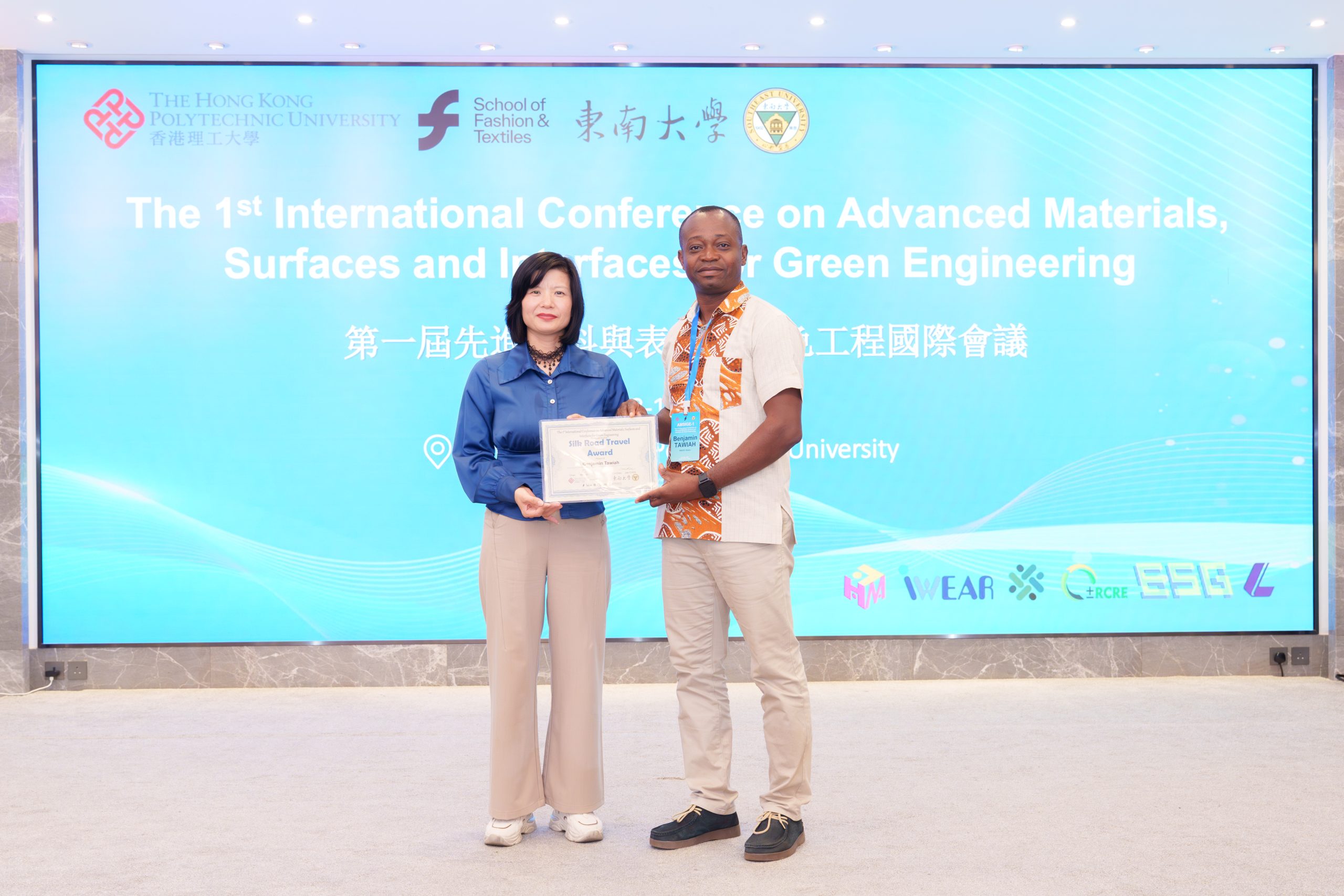
To nurture future leaders, the conference presented various accolades celebrating contributions to ecological transformation, including the Young Scientist, Young Scholar, and Best Poster awards, as well as the Silk Road Travel Award, which was presented to an African researcher under the Belt and Road Initiative. These honours underscored the conference’s commitment to empowering the next generation and reinforcing the role of young talent in advancing sustainable innovation.
Conclusion
By bridging the gap between fundamental material science and green engineering, AMSIGE-1 has paved the way for a more sustainable technological landscape. The conference fostered a unique environment where knowledge co-creation flourished among established experts and emerging scholars alike. As the event concluded, a clear consensus emerged that achieving sustainability requires both innovative material interfaces and collaborative global networks. Ultimately, AMSIGE-1 set a benchmark for how regional synergy can catalyse international innovation, ensuring that advanced material sciences remain aligned with the principles of a green, resilient future.

GALLERY